
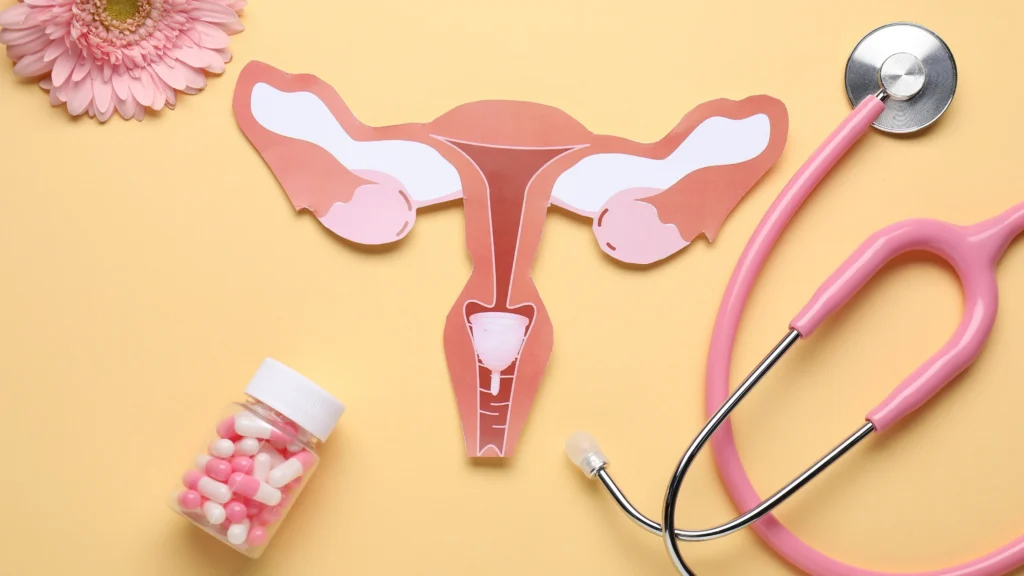
If you’ve recently come across the term PMOS instead of PCOS, you might be wondering whether anything has changed about your diagnosis. The reassuring answer is no, the condition itself remains the same. What’s changing is the language fertility experts use to describe it.
For decades, Polycystic Ovary Syndrome (PCOS) has been the most widely recognized name. However, fertility clinicians and researchers increasingly agree that it doesn’t fully capture the condition’s complexity. Many of the symptoms and health effects extend well beyond the ovaries, involving broader hormonal and metabolic systems throughout the body. To reflect this more complete understanding, some fertility and endocrine specialists are beginning to use a new term: Polyendocrine Metabolic Ovarian Syndrome (PMOS).
PMOS is not a new diagnosis, it’s a more precise name for a condition that affects approximately 1 in 8 women worldwide, or over 170 million people, with other estimates suggesting it impacts about 1 in 10 women of reproductive age, many of whom remain undiagnosed.
The updated terminology highlights what researchers have long observed in clinical practice. “Polyendocrine” acknowledges the multiple hormone systems involved. “Metabolic” reflects the common association with insulin resistance, blood sugar dysregulation, cholesterol changes, blood pressure concerns, weight changes, and long-term metabolic risk. “Ovarian” keeps focus on ovulation and reproductive health, without implying the condition is limited to the ovaries alone.
In short, PMOS doesn’t replace what you know as PCOS, it refines it. The goal is better clarity, better understanding, and ultimately better care for a hormonal infertility condition that has always been more complex than its name suggested.
What Is Polycystic Ovary Syndrome (PCOS)?
PCOS, or Polycystic Ovary Syndrome, is a complex hormonal condition that affects ovulation, androgen hormones, metabolic health, and the reproductive system. It is one of the most common causes of female infertility linked to irregular ovulation. PCOS affects about 1 in 10 women of reproductive age, with many women still undiagnosed. For decades, the name focused attention on ovarian cysts, even though the medical reality has always been broader.
The word “polycystic” can sound like the ovaries are covered in true cysts. In many patients, ultrasound shows small fluid-filled sacs called follicles. These follicles contain immature eggs, and they are not the same as abnormal ovarian cysts. PCOS has always involved more than the ovaries. It can affect reproductive hormones, insulin resistance, blood sugar, irregular menstrual cycles, skin symptoms, metabolic health, mental health, and fertility.
At Positive Steps Fertility in Mississippi and Louisiana, we provide expert information and fertility care for individuals with PCOS, helping patients understand irregular ovulation, hormone imbalances, infertility, and the fertility treatment options available to improve their chances of pregnancy.
What Is Polyendocrine Metabolic Ovarian Syndrome (PMOS)?
PMOS stands for Polyendocrine Metabolic Ovarian Syndrome, the updated name for the condition previously called polycystic ovary syndrome (PCOS). The new name gives more attention to the metabolic dimension of the condition. “Polyendocrine” refers to the hormone systems involved. “Metabolic” recognizes insulin resistance, blood sugar, cholesterol, blood pressure, weight gain, metabolic syndrome, and long-term metabolic risk. “Ovarian” keeps ovulation and fertility in the diagnosis without making the condition sound limited to the ovaries.
PMOS is not a new condition. It is a more accurate name for a condition many patients have been managing for years. Dr. Preston Parry, leading fertility specialist in Mississippi and Louisiana, explains the shift from PCOS to PMOS, what is changing, and what it may mean for diagnosis, treatment, and patient care in this short Instagram video.
You will still see PCOS in medical records, insurance forms, lab paperwork, and online articles while fertility providers update patient education and medical materials.
What Are the Symptoms of PMOS?
The PMOS (PCOS) symptoms do not change because the name changed. Common signs include:
- Irregular periods or irregular menstrual cycles
- Difficulty identifying ovulation
- Acne or oily skin
- Excess hair growth, called hirsutism
- Thinning hair on the scalp
- Weight gain or insulin resistance
- Blood sugar concerns
- Difficulty getting pregnant because of irregular ovulation
PMOS (PCOS) is a condition that can affect many aspects of your health, not just your reproductive system. In addition to influencing ovulation and fertility, it may increase the risk of conditions such as type 2 diabetes, high blood pressure, metabolic syndrome, heart disease, and certain pregnancy complications. Some people may also experience mood changes, including anxiety or depression. If menstrual cycles are very infrequent or absent for long periods, the uterine lining may also require monitoring to help protect long-term health.
The good news is that PMOS (PCOS) is manageable with the right fertility care. Because several other conditions, including thyroid disorders, elevated prolactin levels, adrenal disorders, and certain medications, can cause similar symptoms, getting an accurate diagnosis is the first positive step. With the right testing, your fertility doctor can identify the underlying cause and create a personalized treatment plan to support your overall health, fertility, and future goals.
How Is PMOS (PCOS) Diagnosed?
The diagnostic criteria for PMOS remain the same as PCOS. A PMOS (PCOS) diagnosis generally requires two of the following, after other causes are excluded:
- Elevated androgens based on symptoms or blood testing
- Ovulatory dysfunction, such as irregular or absent ovulation
- Polycystic ovary appearance on ultrasound or elevated AMH levels
If you have both irregular cycles and elevated androgen hormones, ultrasound or AMH is not required for diagnosis. The name change aims to improve earlier diagnosis, earlier intervention, scientific accuracy, and future research. It also encourages stronger metabolic screening, including blood sugar, cholesterol, blood pressure, and other markers that show the full metabolic picture.
Does PMOS Change Fertility Treatment?
No! PMOS (PCOS) does not automatically change fertility treatment. Your fertility treatment plan still depends on your symptoms, ovulation, age, hormone levels, metabolic health, fallopian tubes, uterus, sperm results, medical history, and goals. If you are trying to get pregnant, PMOS (PCOS) treatment focuses on ovulation and overall fertility, including egg supply, fallopian tubes, the uterus, sperm health, timing, and age.
At Positive Steps Fertility in Mississippi and Louisiana, female fertility testing looks beyond one diagnosis. Dr. Preston Parry’s patented Parryscope® fertility testing evaluates ovarian reserve, fallopian tube openness, and the uterine cavity in a single visit with same-day results.
For some patients, IUI treatment is the best next positive step. Others may benefit from in vitro fertilization (IVF) treatment when earlier fertility treatments have not worked or another diagnosis makes IVF the better option.
When Should You See a Fertility Specialist for PMOS (PCOS) Treatment in Mississippi and Louisiana?
A fertility specialist can help when PMOS (PCOS) affects ovulation, cycle predictability, or pregnancy timing. Consider scheduling a fertility evaluation with Positive Steps Fertility in Mississippi and Louisiana if you have irregular periods, unclear ovulation, a known PMOS (PCOS) diagnosis, a history of miscarriage, or difficulty getting pregnant after 12 months if you are under 35, or 6 months if you are 35 or older.
If you already have a PMOS (PCOS) diagnosis, bring lab results, ultrasound reports, medication lists, cycle tracking, ovulation test results, and prior fertility testing with you to your first appointment at Positive Steps Fertility. If you suspect you have PMOS (PCOS) but have not been diagnosed, write down your cycle pattern, symptoms, hair growth concerns, weight changes, medications, and pregnancy timeline for our fertility doctor to evaluate.
What Does the PCOS Name Change to PMOS Mean for You, and Where Can You Get Fertility Care?
The PCOS name change to PMOS does not change your diagnosis. It gives the condition a more accurate name. PMOS represents what many patients already know from experience. This is a complex endocrine and metabolic condition that can impact fertility, metabolic health, mental health, pregnancy risk, and long-term health.
If you live in Mississippi or Louisiana and your cycles are irregular, ovulation is unclear, or pregnancy has not happened after trying, schedule a PMOS (PCOS) consultation with Positive Steps Fertility today to get an evaluation. We proudly serve patients across Madison, Gulfport, Starkville, Hattiesburg, Shreveport, Slidell, and Monroe.