
Third-Party Reproduction: Surrogacy & Donor Pathways to Parenthood
At Positive Steps Fertility, third-party reproduction options including egg donation, sperm donation, embryo donation, and surrogacy offer hope and expanded possibilities for individuals and couples facing infertility. These advanced fertility pathways help overcome biological barriers and make parenthood possible when it may not otherwise be achievable with one’s own eggs or sperm.
Serving patients across Mississippi and Louisiana, including Madison, Gulfport, Starkville, Hattiesburg, Shreveport, Slidell, and Monroe, our fertility clinic provides expert, compassionate care for complex family-building journeys. Every fertility treatment plan is guided by reproductive endocrinology expertise and designed to meet each patient’s unique medical and personal needs.
What Is Third-Party Reproduction?
Third-party reproduction refers to fertility treatments that use donor sperm, donor eggs, donor embryos, or a gestational carrier to achieve pregnancy. These options are often recommended when patients face infertility challenges or medical conditions that prevent natural conception or carrying a pregnancy.
Who Can Benefit From Third-Party Reproduction?
Third-party reproduction may be recommended for:
- Patients with repeated IVF failure or poor embryo development
- Women with diminished ovarian reserve or premature ovarian failure
- Men with severe sperm abnormalities
- Individuals with genetic conditions they do not want to pass on
- Same-sex or LGBTQIA+ couples building biological families
- Single parents choosing donor-based conception
- Patients unable to carry a pregnancy safely
Our fertility doctor evaluates each case individually to determine the most appropriate and effective path forward.
What Is Fertility Donation?
Fertility donation involves the use of donated eggs, sperm, or embryos from carefully screened donors to help another individual or couple achieve pregnancy. Donation is an important part of reproductive medicine and expands the possibilities for patients who cannot conceive using their own gametes.
Donors are thoroughly screened for medical history, genetic risks, and overall reproductive health. Depending on the situation, donors may be anonymous or known (such as a friend or family member).
3 Types of Fertility Donation
Egg Donation
Egg donation involves a healthy woman donating her eggs to help another individual or couple conceive through IVF. This is commonly used for patients with poor egg quality, age-related infertility, diminished ovarian reserve, or premature ovarian failure.
Eggs are retrieved after medication stimulates the ovaries and can be used immediately or frozen for future use. The eggs are fertilized in the lab, and embryos are transferred into the recipient’s uterus.
Sperm Donation
Sperm donation is used in cases of male factor infertility, genetic concerns, or when a single woman or same-sex female couple wishes to conceive. Donor sperm is used in IUI or IVF procedures and is carefully screened to ensure safety and quality.
Embryo Donation
Embryo donation occurs when embryos created during another patient’s IVF cycle are donated to individuals or couples who cannot create viable embryos themselves. These embryos are thawed and transferred to the uterus during an IVF cycle, offering another path to pregnancy and parenthood.
Surrogacy: Bringing Dreams to Life
Surrogacy is a powerful family-building option for individuals who are unable to carry a pregnancy. A surrogate (gestational carrier) carries a pregnancy on behalf of intended parents using embryos created through IVF.
Gestational carriers do not provide the egg and are not genetically related to the child. Instead, they serve as a supportive partner in helping intended parents achieve pregnancy safely and successfully.
Gestational Surrogacy vs. Traditional Surrogacy
Gestational surrogacy is now the most commonly used form of surrogacy in modern fertility care. It separates genetic and pregnancy roles, reducing legal and emotional complexity.
Traditional surrogacy, where the surrogate uses her own eggs, is rarely used today due to increased legal risk, emotional complexity, and the advancement of IVF technology.
Gestational surrogacy offers:
- A clearer legal and medical framework
- No genetic relationship between surrogate and child
- Greater emotional boundaries for all parties
- Improved safety and predictability through IVF
At Positive Steps Fertility, we work exclusively with gestational carriers.
Compassionate Third-Party Reproduction Services in Mississippi & Louisiana
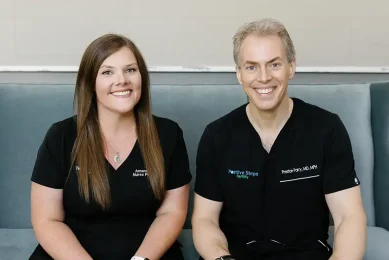
Led by Dr. Preston Parry, a nationally recognized reproductive endocrinology and infertility specialist and inventor of the Parryscope® fertility testing approach, Positive Steps Fertility combines advanced reproductive science with compassionate, patient-centered care.
From donor selection to IVF coordination and surrogacy support, our fertility clinic helps guide patients through every positive step of third-party reproduction with clarity, respect, and expertise.
Frequently Asked Questions about Third-Party Reproduction
What is third-party reproduction in fertility treatment?
Third-party reproduction is a set of fertility treatments that use donor eggs, sperm, embryos, or a gestational carrier to help individuals or couples achieve pregnancy when they cannot do so on their own.
Is a gestational carrier genetically related to the baby?
No. In gestational surrogacy, the embryo is created using the intended parents’ or donor genetic material through IVF. The surrogate carries the pregnancy but does not contribute genetic material.
How do I know if I need donor eggs or sperm?
Your fertility specialist will evaluate hormone levels, ovarian reserve, sperm quality, medical history, and prior treatment outcomes to determine whether donor gametes may improve your chances of a successful pregnancy.
Is third-party reproduction available in Mississippi and Louisiana?
Yes. Positive Steps Fertility provides third-party reproduction services for patients across Mississippi and Louisiana, including Madison, Gulfport, Starkville, Hattiesburg, Shreveport, Slidell, and Monroe.
Is third-party reproduction safe?
Yes. Donors and gestational carriers undergo thorough medical, genetic, and psychological screening to ensure safety, and all procedures are performed under strict medical guidelines using advanced reproductive technology.