
What Is In Vitro Fertilization (IVF)?
In Vitro Fertilization (IVF) is an assisted reproductive technology that helps overcome many causes of infertility by combining a man’s sperm and a woman’s egg in a controlled laboratory environment to achieve fertilization.
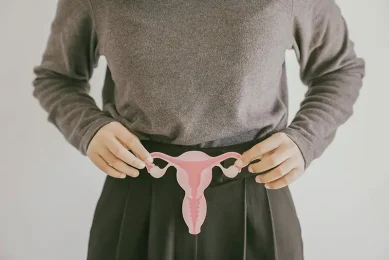
If fertilization is successful, embryos are created and allowed to develop in the laboratory. One or more embryos are then transferred into the woman’s womb (uterus) in an effort to achieve pregnancy.
“In vitro” is Latin for “in glass,” referring to the laboratory Petri dish where fertilization takes place outside the body. The resulting embryo is later transferred into the uterus to increase the chances of implantation and pregnancy.
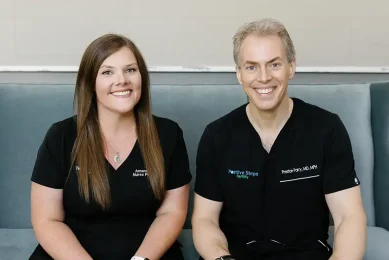
At Positive Steps Fertility, IVF is performed using advanced laboratory techniques and individualized fertility treatment planning for patients across Mississippi and Louisiana.
How Successful Is IVF?
IVF is one of the most effective fertility treatments available and is successful in overcoming many causes of both female and male infertility.
According to the Society for Assisted Reproductive Technology (SART), cumulative pregnancy rates for IVF can often exceed 70% when multiple embryo transfers from a single IVF cycle are included.
In many cases, more than one embryo is created during IVF. Patients and physicians work together to decide whether one or more embryos should be transferred into the uterus. Any remaining embryos can be frozen and stored for future use, donated, or discarded based on patient preference.
When preimplantation genetic testing (PGT or PGS/PGD) is performed, miscarriage rates may be lower because genetically abnormal embryos can be identified before transfer.
What Is the IVF Treatment Process?
The IVF journey requires patience, as several important steps must occur before pregnancy can be achieved.
The IVF process includes four main steps:
- Step 1: Ovarian stimulation (egg development)
- Step 2: Egg and sperm retrieval
- Step 3: Fertilization in the laboratory
- Step 4: Embryo transfer (implantation)
These steps may occur over several days to several months depending on whether fresh or frozen cycles are used.
IVF Step One: Ovarian Stimulation
During IVF, a woman takes injectable fertility medications to stimulate the ovaries to produce multiple eggs. This is called controlled ovarian hyperstimulation (COH).
Normally, only one egg develops per cycle. With COH, multiple eggs can be developed at one time, increasing the number of embryos available for transfer or freezing.
Throughout this phase, the ovaries are closely monitored with ultrasound to determine when egg retrieval should be performed.
In some cases, alternative protocols such as mini-IVF or natural cycle IVF may be discussed, though standard IVF stimulation is most commonly recommended due to higher efficiency and outcomes.
IVF Step Two: Egg and Sperm Retrieval
Egg retrieval is performed using a thin needle guided into the ovaries to collect eggs from developing follicles. This is done without surgical incisions.
A typical retrieval yields approximately 10–20 eggs, which are then evaluated in the laboratory.
Sperm collection is usually performed through ejaculation into a sterile cup. In certain cases of male infertility, sperm may be surgically retrieved using sperm aspiration from the testicle or epididymis.
Sperm samples are prepared in the laboratory to isolate the healthiest sperm for fertilization.
IVF Step Three: Fertilization in the Laboratory
After retrieval, eggs are combined with sperm in the laboratory in an attempt to achieve fertilization.
Typically, an egg is placed with tens of thousands of sperm, allowing natural fertilization to occur. In cases of male factor infertility or prior fertilization failure, intracytoplasmic sperm injection (ICSI) may be used.
With ICSI, a single sperm is injected directly into the egg using a specialized micropipette under high magnification by an embryologist at Positive Steps Fertility.
After fertilization, embryos are cultured in the laboratory for approximately five to six days while they continue to develop.
At this stage, preimplantation genetic testing (PGS or PGD) may be performed:
- PGS identifies chromosomal normality (23 chromosome pairs)
- PGD identifies specific inherited genetic conditions such as cystic fibrosis or sickle cell disease
Genetic abnormalities are a common reason for failed implantation or early miscarriage.
IVF Step Four: Embryo Transfer
Embryo transfer is the final step of IVF.
Once the highest-quality embryo(s) are selected, they are placed into a catheter and carefully transferred through the cervix into the uterus.
Ultrasound guidance is used to ensure optimal placement of the embryo within the uterine cavity.
The procedure is typically quick and causes minimal discomfort, often compared to a Pap smear.
A pregnancy test is scheduled approximately 12–14 days after transfer to confirm whether implantation was successful.
Who Should Get IVF?
IVF may be recommended for patients who cannot achieve pregnancy naturally or who are unlikely to succeed with less advanced fertility treatments.
This includes:
- Women of advanced maternal age
- Women with tubal factor infertility (blocked or damaged fallopian tubes)
- Women with ovulation disorders
- Women with endometriosis
- Men with infertility factors
- Same-sex couples
- Single individuals requiring donor eggs, sperm, or gestational carriers
Our fertility doctor may recommend less invasive treatments such as ovulation induction or IUI before proceeding to IVF.
If these options are unsuccessful or not appropriate, IVF may be recommended as the next step.
7 Reasons to Consider IVF Treatment
Age-related infertility
Egg quality declines with age. IVF can improve success by increasing egg yield and allowing selection of the highest-quality embryos.
Low ovarian reserve
IVF helps stimulate multiple eggs in women with reduced ovarian reserve, improving chances of viable embryo development.
Recurrent pregnancy loss
IVF with genetic testing can help identify healthy embryos and improve implantation success.
Unexplained infertility
IVF helps overcome undiagnosed barriers to conception.
Anovulation
IVF can bypass irregular or absent ovulation when other treatments fail.
Damaged fallopian tubes
IVF bypasses the fallopian tubes entirely, making it a primary treatment option.
Male infertility factors
IVF with ICSI improves fertilization in cases of low sperm count or poor motility.
Are There Risks to IVF?
The most common IVF risk is multiple pregnancy (twins or more), which can increase risks such as premature birth, low birth weight, and pregnancy complications.
For this reason, most patients are advised to transfer a single embryo when possible.
Other risks include:
- Mild bloating, headaches, or mood changes during stimulation
- Ovarian hyperstimulation syndrome (OHSS), though rare with monitoring
- Standard procedural risks such as bleeding, infection, or anesthesia reaction during egg retrieval
Careful monitoring throughout treatment helps reduce these risks while optimizing success.
Schedule an IVF Consultation with Positive Steps Fertility
Positive Steps Fertility welcomes new patients for IVF and offers timely access to fertility consultations across Mississippi and Louisiana.
Many patients may also be candidates for advanced diagnostic evaluation, including the innovative Parryscope® fertility assessment, which provides rapid insight into potential causes of female infertility and helps guide IVF treatment planning.
From there, our fertility specialist will recommend the most appropriate positive path forward, whether IVF or another infertility treatment option.
Frequently Asked Questions about In Vitro Fertilization (IVF)
What is IVF?
IVF is an advanced fertility treatment where eggs are fertilized with sperm in a laboratory before being transferred into the uterus.
How long does IVF take?
A typical IVF cycle takes several weeks, though frozen embryo transfers may extend the timeline.
Is IVF painful?
Most patients report mild discomfort during egg retrieval and minimal discomfort during embryo transfer.
What are IVF success rates?
Success varies by age and diagnosis, but cumulative rates can exceed 70% across multiple cycles.
How many embryos are transferred?
Most patients are advised to transfer one embryo to reduce the risk of multiple pregnancy.
What happens to extra embryos?
Extra embryos may be frozen, stored for future use, or donated depending on patient preference.
Does IVF guarantee pregnancy?
No, but it is one of the most effective fertility treatments available.